The hidden her-story of Anne of Cleves
Museum volunteer and Keele University history graduate Krowley Jasper explores the story hidden within an embroidery of Anne of Cleves- and explains why this Queen has a special place in their heart.
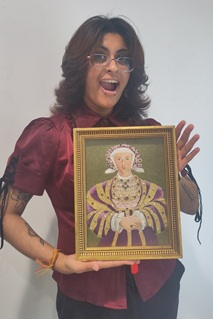
I started volunteering at the Brampton museum in October 2025 but even before then noticed the embroideries of Henry VIII and his six queens as part of a textile exhibition in September. I was immediately drawn to Anne of Cleves and I remember thinking how unusual it was to see her represented to the same degree as the other five queens. So often is Anne treated like a footnote in Tudor history, but here she was before me beautifully stitched with so much love and care by artist Daisy Rigby Parker (hence me so giddy holding her in her frame!).
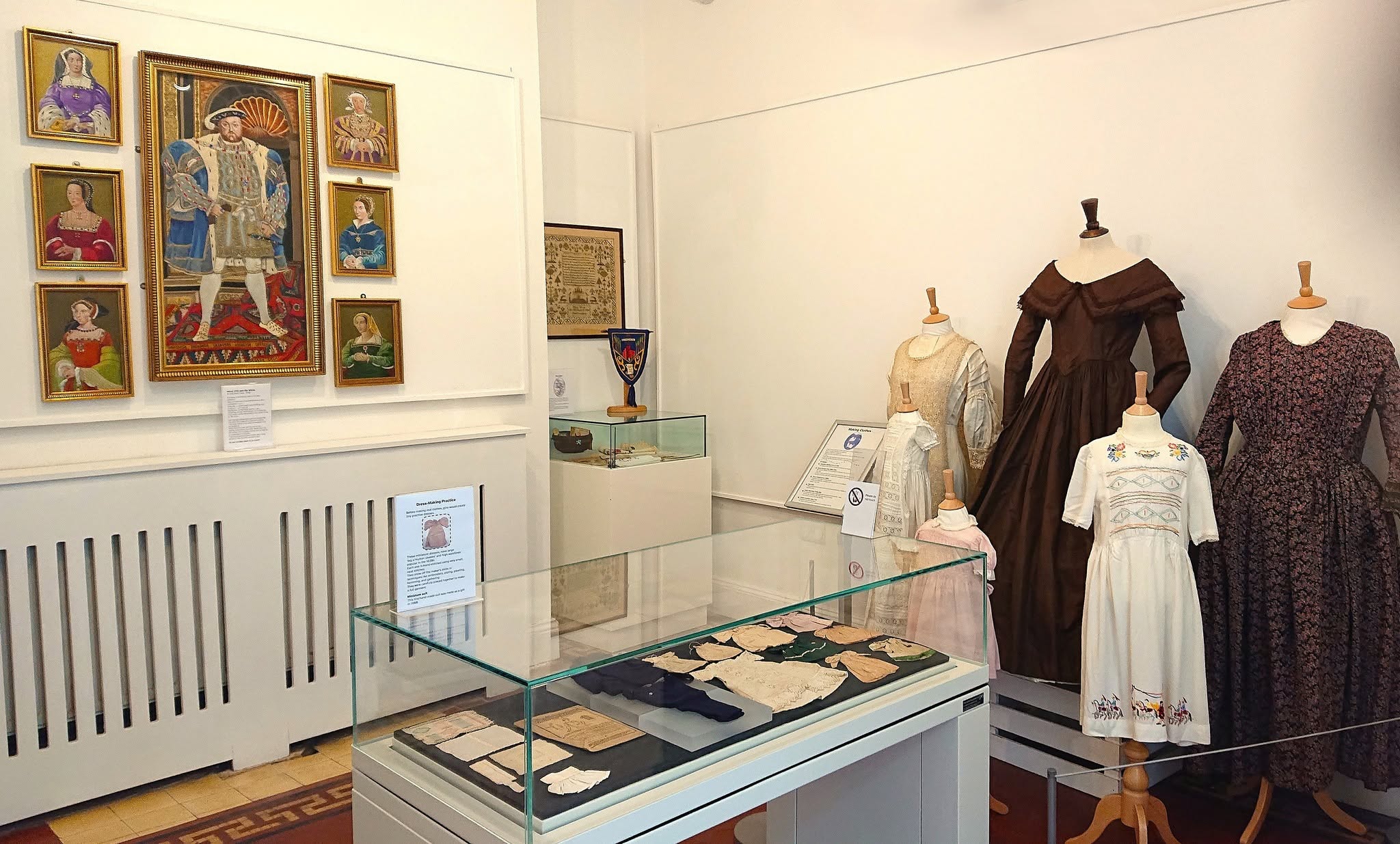
I’ve always been fascinated by the story of Henry’s six wives, but Anne always stood out to me. Growing up, she had always been reduced simply to that of a divorce, the ‘ugly one’, the infamous ‘Flanders Mare’. Those nicknames never quite sat right with me, surely there was more to this woman than just a six month marriage? This curiosity eventually became the inspiration for my history dissertation at Keele University. I sought to answer a simple question: what can we unveil about Anne when we move beyond the gossip, sexism and xenophobia that has followed her for 500 years? Instead of viewing her through Henry’s disappointment, I wanted to understand who Anne was on her own terms; a German noblewoman in an unfamiliar land with unfamiliar customs and expectations she had no idea how to fulfil.
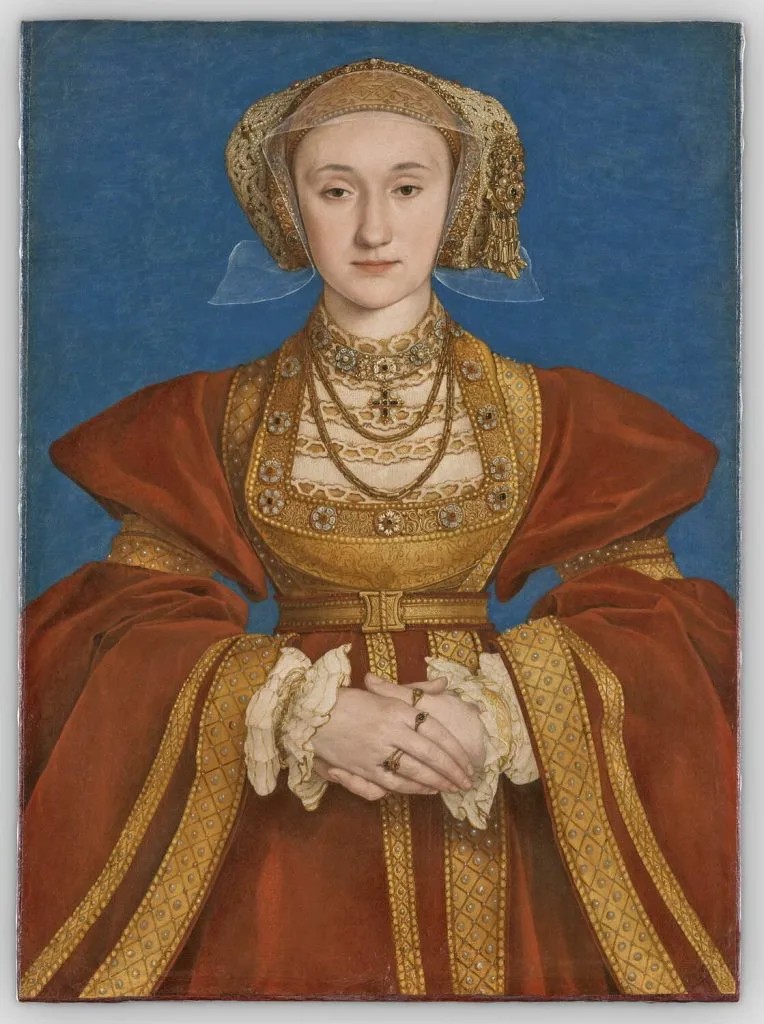
Anne of Cleves arrived in England in December 1539 to marry Henry VIII and establish an important political alliance, strengthening England’s alignment against Catholicism and the Holy Roman Empire. Like many foreign brides in the sixteenth century, she had very little say in this arrangement. She’d never seen Henry before setting off on her long journey. Even if she did have an inkling as to the looks of her new husband, she surely would have been expecting the tall dashing image of the sportsman Henry was in his youth and certainly not the obese tyrant he had become. The story goes that Henry had taken one look at her before deciding she was far too hideous to ever be queen by his side and that she surely wasn’t the same woman portrayed in her marital portrait by Hans Holbein. Here’s the thing though, modern historians generally agree that Holbein’s portrait of her was actually a faithful likeness, even contemporary courtiers and chroniclers (such as Charles Wriothesley and Heinrich Olisleger) agree that Holbein had portrayed her accurately.
A pivotal turning point in this disaster of a marriage took place in Rochester on New Year's, 1540. Anne and her ladies were watching some festivities when several men in multicoloured cloaks burst into her royal room, one gentleman even proceeded to embrace and kiss her. It turns out that Henry VIII had grown impatient, no longer wanted to meet his queen in Greenwich and had ordered his men to join him in surprising her at Rochester instead. Naturally, not knowing this was Henry, she regarded him little. Having grown up in a court that prioritised alliance over spectacle, she would have also been unaware that she was expected to have identified him and played along as the role of unknowing consort. Who else would dare to kiss the King’s bride after all? Unfortunately as she wasn’t expecting this and as he was not in his kingly garbs she had zero reason to play along. This was a complete blow to Henry’s ego, not only was she unaware of cultural practice (yes, multiple kings and queens played this game!), she was also unaware of her husband and unaware of the King of England. It was this moment onwards that Henry’s dissatisfaction became a threat to an alliance and political stability, he had to get rid of her somehow. One can imagine how devastated and heartbroken Anne would have been to receive news that the marriage was never valid.
However, the way she handled this dangerous situation was truly remarkable. She didn’t fight it, she accepted the terms and took it head on, addressing herself as a ‘humble sister and servant, Anne daughter of Cleves’ to prove to Henry that she was willing to immediately play the part he so desperately wanted her to play. She was cunning, she knew what would happen to her if she defied him. As thanks for her compliance, Anne received Richmond Palace, Hever Castle (the Boleyn family home!), a generous income from Henry himself and the exclusive title of the king’s most beloved sister. Beyond her time with Henry VIII, Anne became a cherished stepmother figure to the two Tudor princesses, holding a prominent place in Mary’s coronation procession and regularly contacting the young Elizabeth. It may even be partly due to Anne of Cleves’ treatment at court that taught the young Elizabeth decided to never take a suitor.
There are so many little details about her life that go unnoticed, her embracing of English fashion, enjoyment of hunting and card games, but what shouldn’t go unnoticed is her undeniable bravery and courage. She alone navigated one of Europe’s most intimidating courts and in the end she gained something that many of Henry’s wives never had: the chance to live. Looking back, it’s funny to think that an embroidery in a museum helped reinforce a truth I already felt: Anne deserves so much better than the reputation she has inherited. Museums such as Brampton have a brilliant way of encouraging us to look again at things we already know and love, whether that’s art, people, objects or more. Seeing Anne stitched into that collection felt like a quiet reminder that she belongs in the story just as much as the rest do.
Since then, the Anne of Cleves embroidery has returned to the Brampton Museum art stores. Meanwhile, I’ve finished my history degree at Keele and completed my volunteering at the Brampton museum, moved back home in London and am now working as Warder at Hampton Court Palace- the palace most associated with Henry and his wives. It is surreal to now spend my time in the very place she once walked. Hopefully one day I’ll get the chance to give talks about this incredible Tudor survivor and convince more people that she definitely shouldn’t be forgotten.
By Krowley Jasper
Museum volunteer