Museum Detective Work Uncovers a Rare Piece of Local Medical History
A student placement uncovers a remarkable early X-ray machine hidden in the museum stores and reveals its fascinating local story.
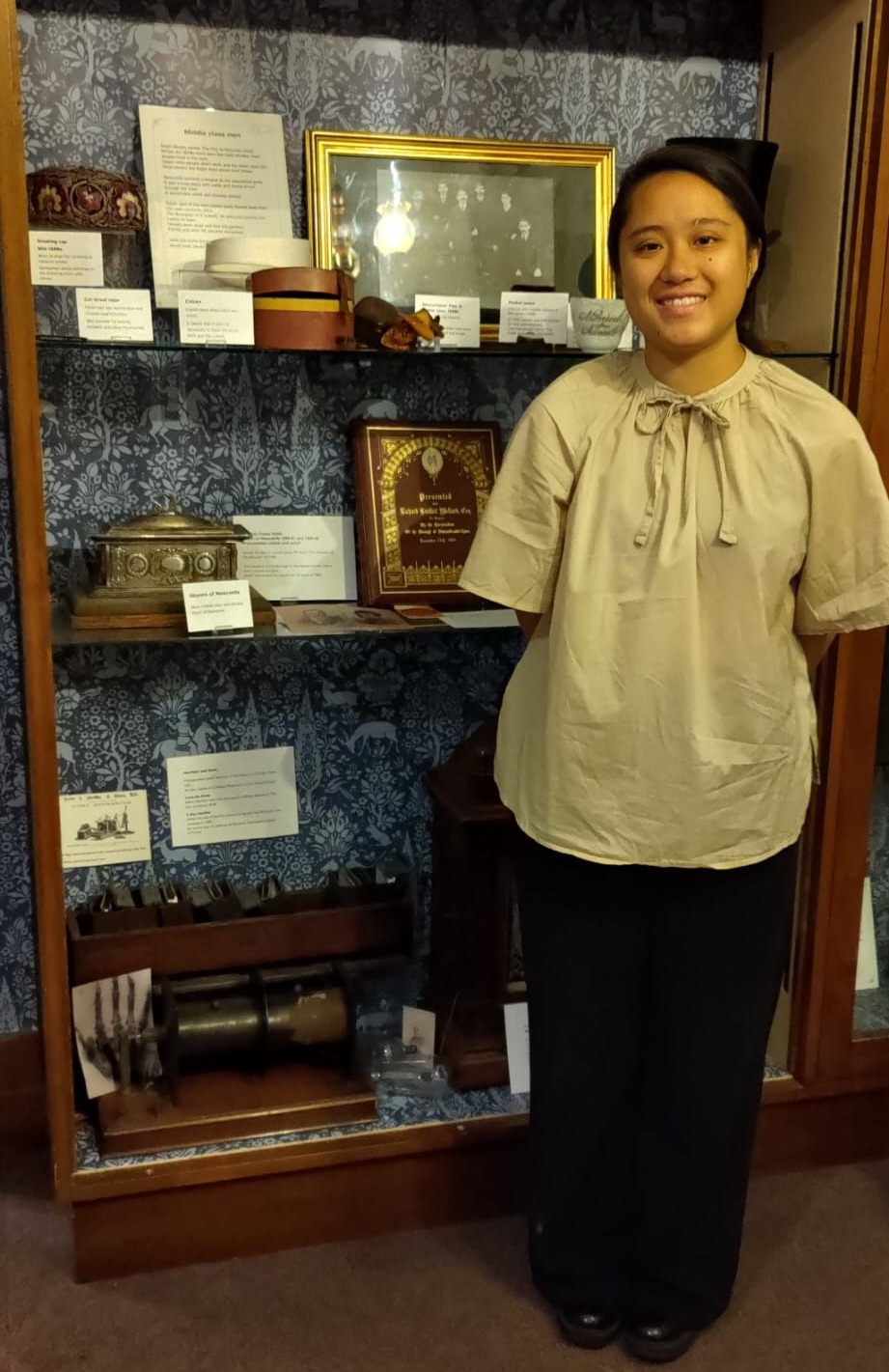
Bethany recently joined us on a work placement from Keele University, where she is studying Biomedical Science.
Her brief was to help improve the museum's collections documentation.
Our museum first opened in 1943, and while cataloguing practices have developed significantly over time, records created before 1991 are often incomplete or inconsistent. The placement involved becoming a museum detective: researching historic records, matching them to objects within the collection, and creating accurate, up-to-date catalogue entries.
Given Bethany's biomedical background, I asked her to look at the sparse documentation relating to the doctor's surgery and medical equipment collections. I wanted to see whether she could uncover more information about this area of the collection and identify exactly what we had.
As she worked through the paperwork, Bethany discovered a catalogue card stating that we had an X-ray machine dating to 1896 that had been donated by A. W. Harrison. Harrison is reputed to have been the first person in the United Kingdom to produce X-ray photographs.
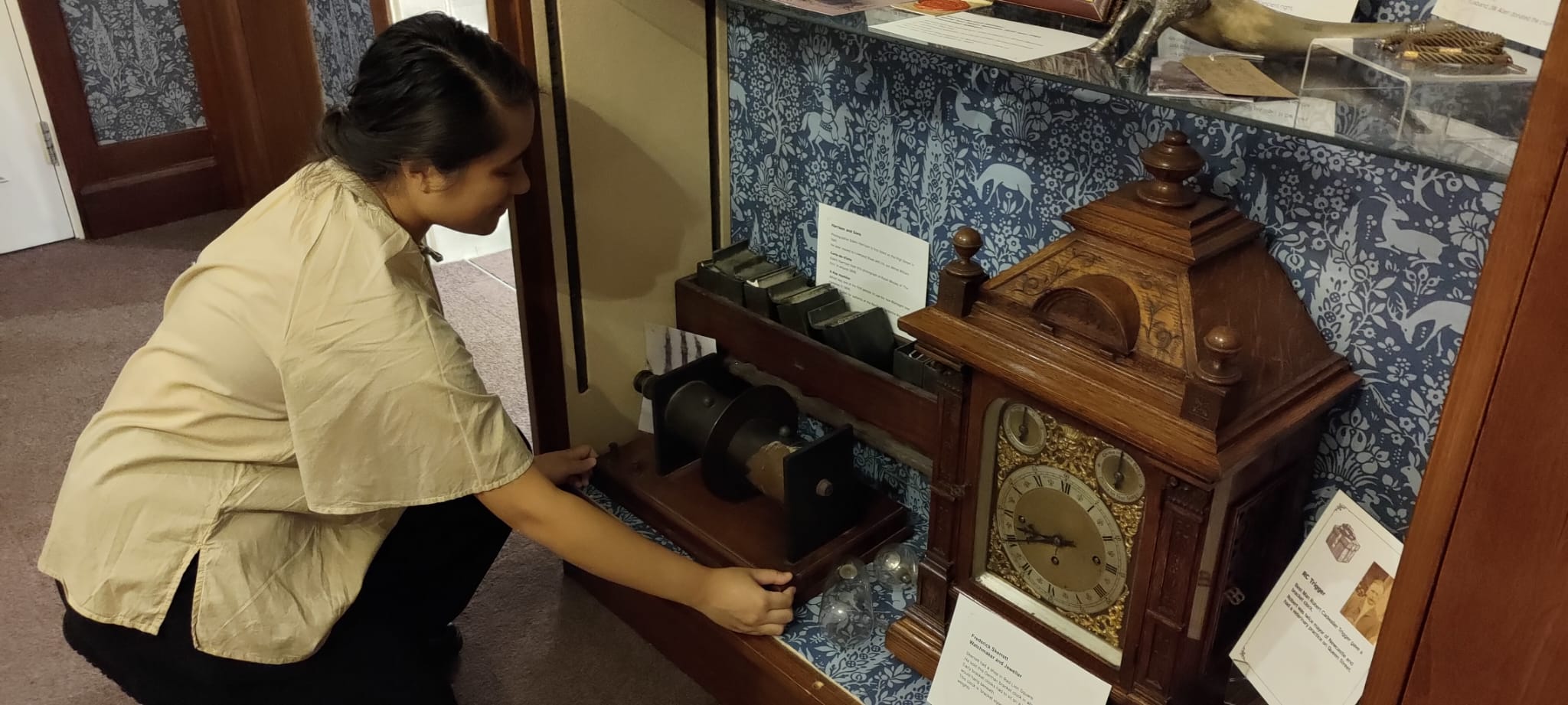
Naturally, we went to look at what we believed was the machine, which was on display in Mrs Mosley's Parlour. However, Bethany, having already carried out some research into early X-ray technology, suspected that something was not quite right.
The machine on display bore a manufacturer's label reading "Cavendish Electro-Therapy and X-Ray Machine". Further investigation showed that this model was not produced until 1905. If our records were correct, this meant that either the machine was part of a later system used by Harrison, or we had identified the wrong object altogether.
X-rays were first discovered in 1895 by the German physicist Wilhelm Conrad Röntgen. Following this groundbreaking discovery, enthusiasts and experimenters across the United Kingdom began building their own equipment based on the new technology. Harrison was one of these pioneers.
Harrison and his father were well-known photographers in the town, giving them a strong understanding of imaging technology. It is perhaps unsurprising that he became interested in what was, at the time, a revolutionary new scientific development.
Bethany found several examples of early X-ray equipment online, including an example in the Science Museum in London. From this research, she discovered that if we really did possess one of the earliest X-ray machines, it would look something like this: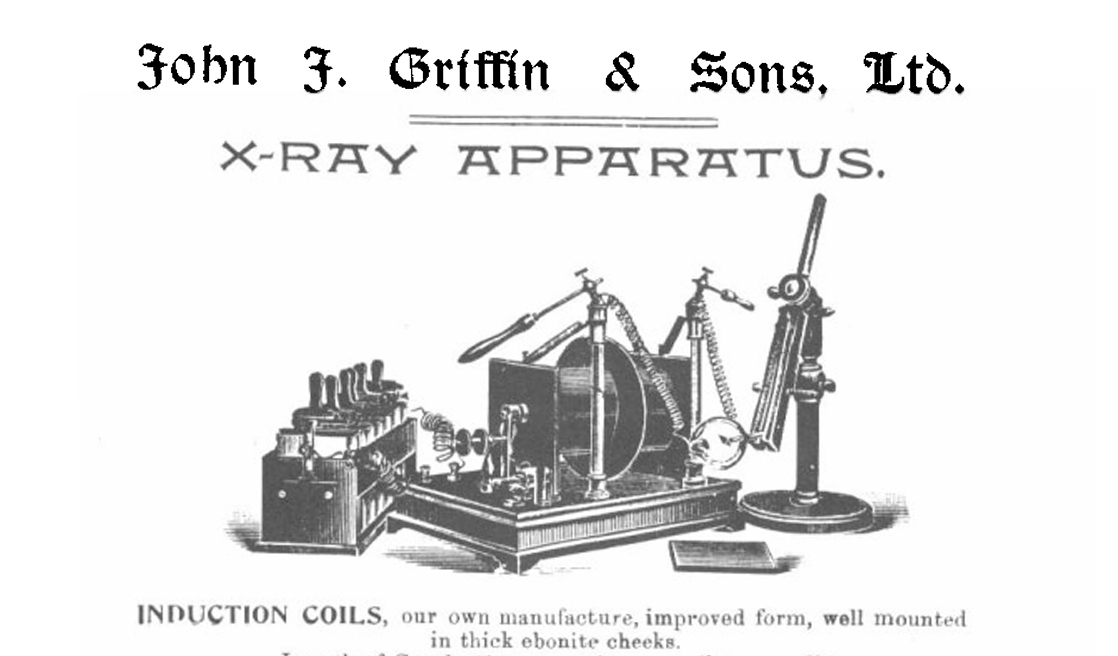
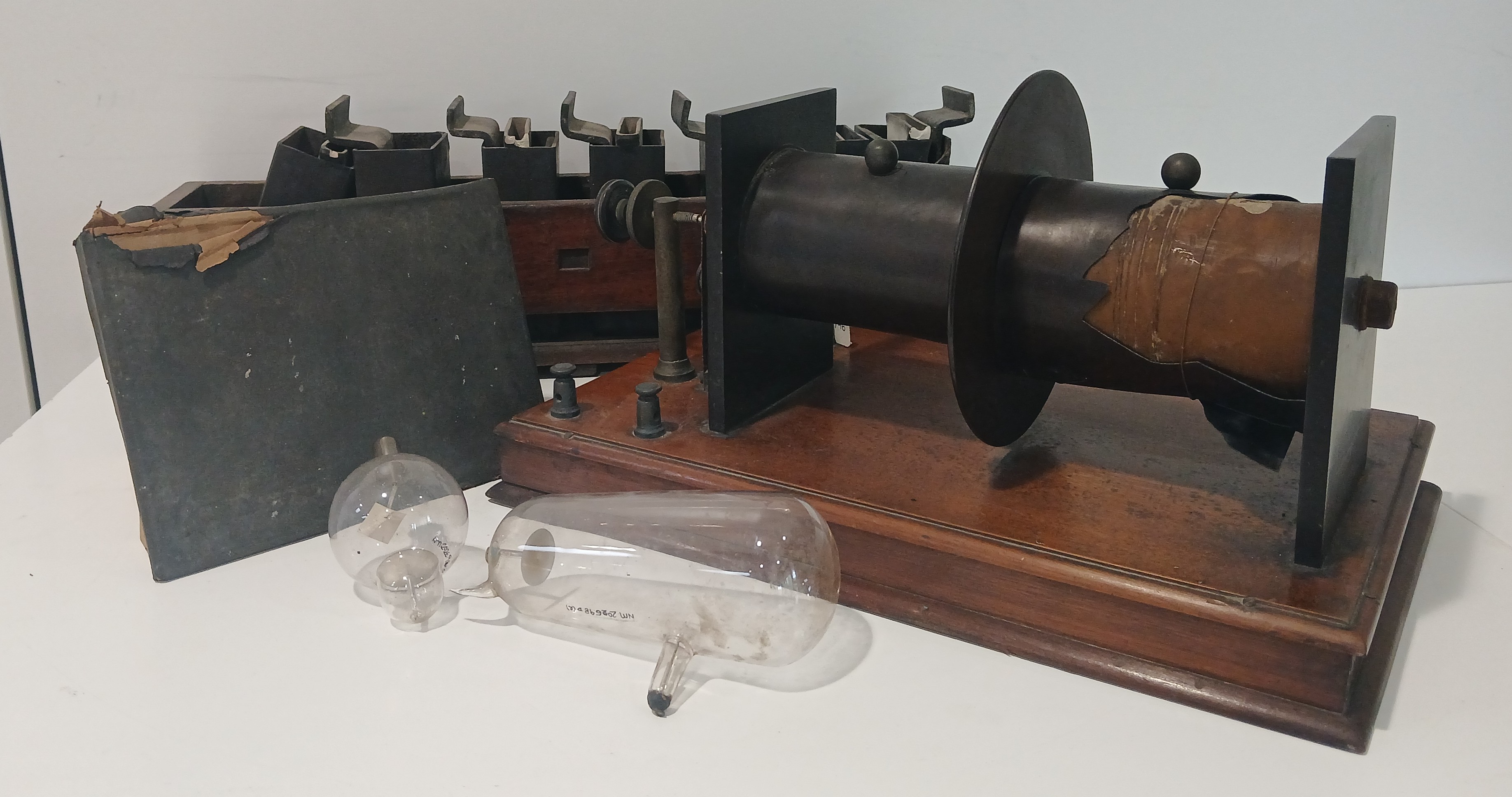
After much searching, Bethany eventually located most, if not all, of the components of the X-ray machine hidden away in our museum stores.
Although our machine differs slightly from the example pictured above, she identified a battery pack, induction coil, truncated cone used to diffuse light, and several cathode X-ray tubes. The connecting wires do not appear to have survived. We were also unable to locate the photographic plate that would have matched the size of the surviving X-ray photographs. However, as a professional photographer, Harrison may well have had access to a range of photographic plates of his own.
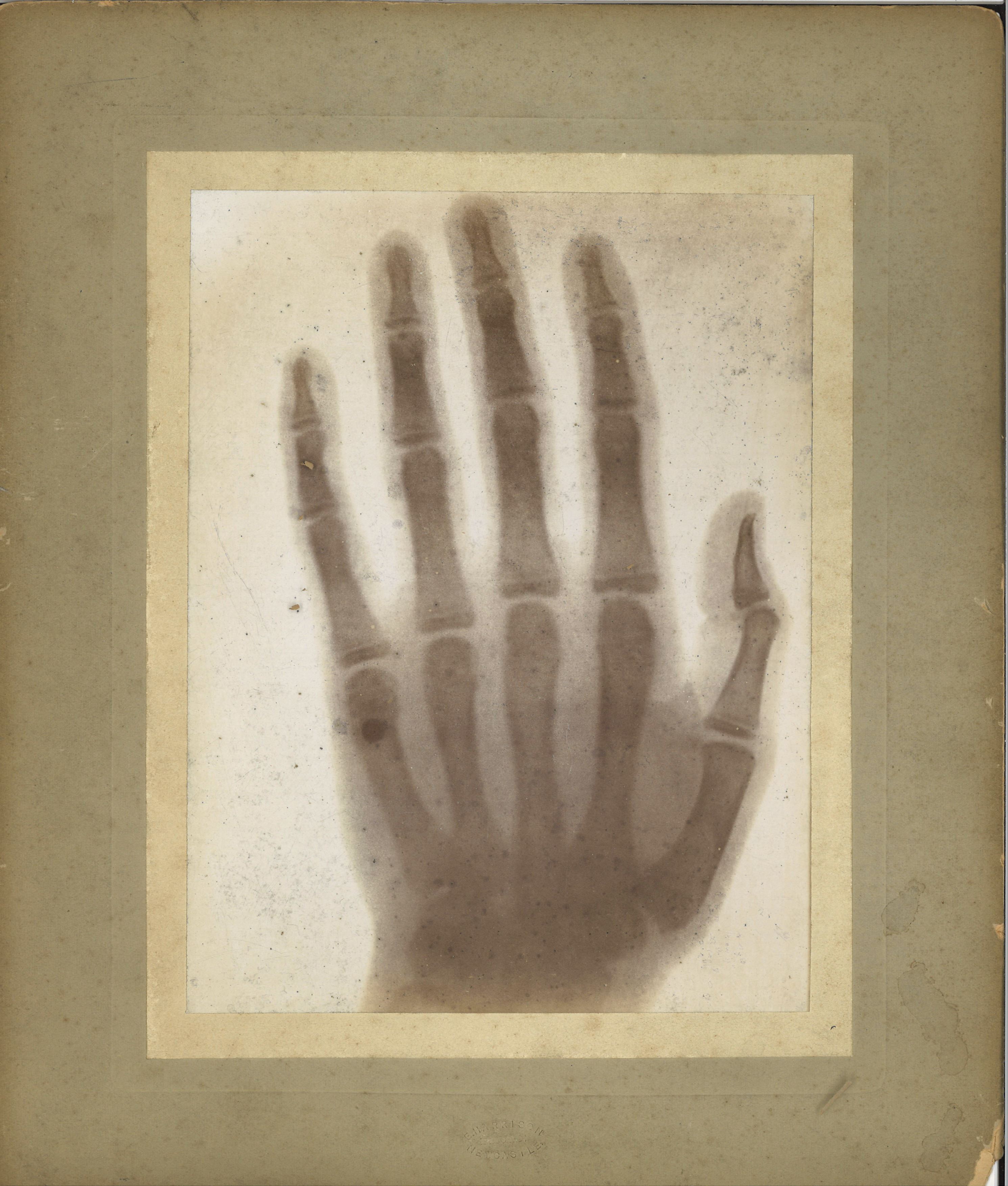
We know that Harrison used his machine at the North Staffordshire Infirmary, and we also hold some of the photographs that he produced using the equipment. One remarkable image shows the injured hand of a miner who had been involved in a short-firing accident. Small fragments of shot can clearly be seen embedded within the hand, highlighted by the X-ray.
 Without their history and context, many of these objects had become difficult to identify. The cathode tubes had been catalogued simply as "unknown glass objects", while the induction coil and battery pack were described as a "wooden tray with holders and a large column on a stand".
Bethany's research has helped us reconnect these objects with their fascinating story and has significantly improved our understanding of this important part of the collection.
You can now see the X-ray machine, or at least many of its surviving components, on display in Mrs Mosley's Parlour.
By Clare Griffiths
Collections Officer, Brampton Museum and Art Gallery
Share and Enjoy: These icons link to social bookmarking sites where readers can share and discover new web pages.


