

New tree planting helping to promote greener future
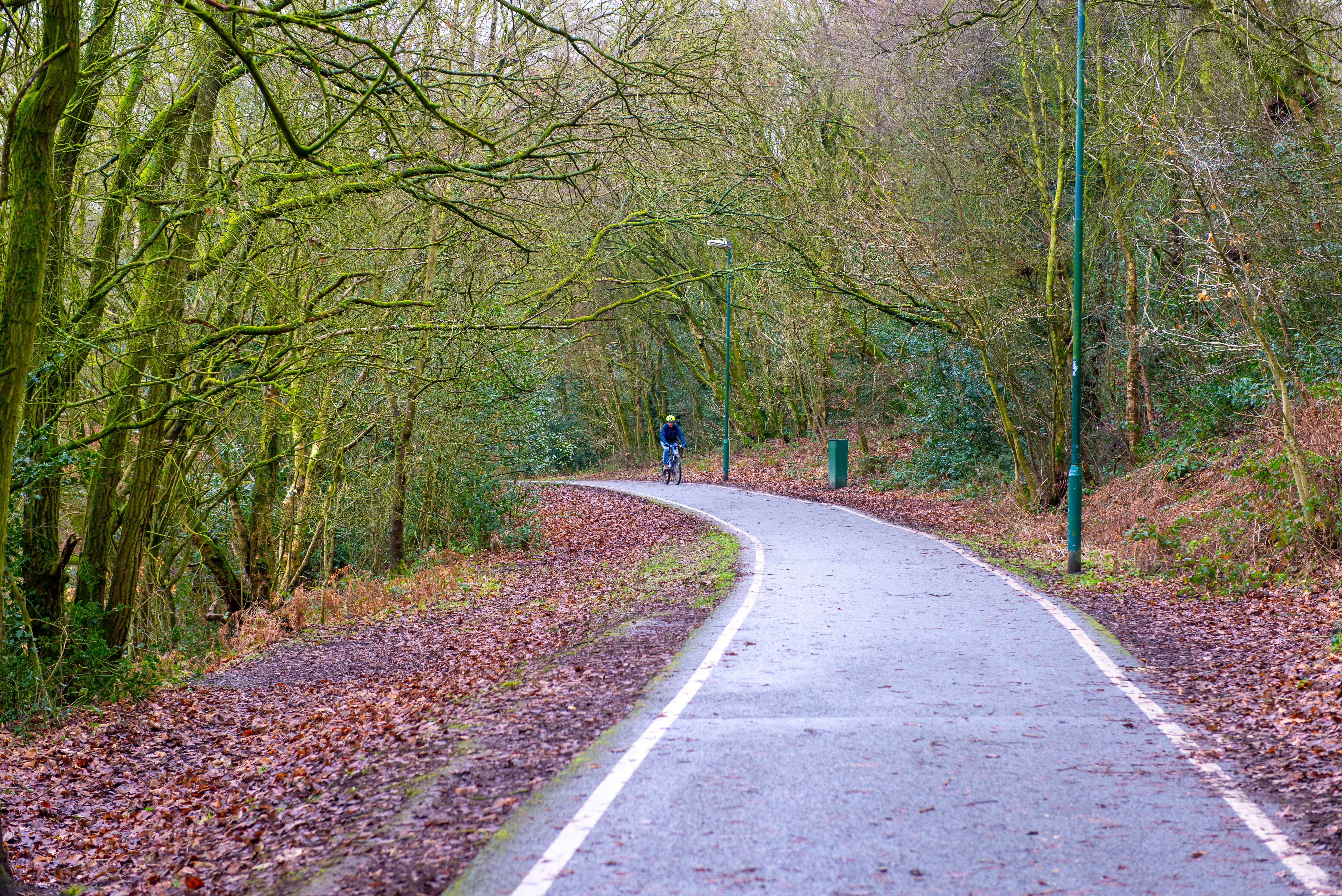
An extensive programme to significantly increase the tree canopy across Newcastle-under-Lyme is branching out.
Newcastle-under-Lyme Borough Council is set to plant 3,000 trees – including beech, blackthorn, hazel, silver birch and wild cherry – at eight new sites from February as part of its Borough Tree Planting Strategy.
The strategy, part of the Sustainable Environment Strategy, aims to enhance the natural environment, improve biodiversity and contribute to the council’s 2030 net zero goal: trees absorb large amounts of carbon dioxide from the air where it contributes to climate change.
The latest proposed carbon capture areas are: Bathpool Park, land off Bignall End Road, Audley; Birchenwood Countryside Park, Crackley recreation ground, the Donkey Field at the rear of Ellams Place, Silverdale; Station Walks, Newcastle; land by Paris Avenue, opposite The Butts, Thistleberry; and Newcastle's Queen Elizabeth Park.
The council has planted, or facilitated, 34,000 trees at 37 locations over the past five years in consultation with residents. This includes the Lyme Forest, situated at the newly established Lyme Countryside Park, which commemorates the borough’s 850th anniversary.
Cllr. David Hutchison, Cabinet member for Sustainable Environment, said:
Launching the seventh phase of our Borough Tree Planting Strategy shows our continued commitment to bringing more life, colour and nature into the heart of our communities.
Each new tree we plant is an investment in our borough – helping to create greener, healthier and more welcoming places. My latest favourite is the wild cherry which provides an early source of nectar and pollen for bees while the cherries are eaten by birds such as the blackbird and song thrush. The foliage is eaten by caterpillars of many moth species.
Having been the first council in Staffordshire to adopt a nature recovery motion back in November 2021, we’re proud to be working with residents to grow a borough that is richer in nature and better prepared for the challenges of the future.”
Council Leader Simon Tagg added:
Our tree-planting programme is about securing long-term environmental, recreational and climate benefits for our communities. As we move into the latest phase, we are simultaneously progressing a programme of Fields in Trust applications to ensure these newly planted areas, alongside our cherished parks and open spaces, receive permanent protection in perpetuity. By embedding this dual approach into our strategies, we’re not only capturing carbon and enhancing biodiversity today, but safeguarding these vital green assets so they remain accessible for generations to come.”
Good progress is being made on the wider Sustainable Environment Strategy, a landmark document setting out how the council will also help the wider borough to become more sustainable, resilient and environmentally responsible – with a 2050 net zero target.
As well as ongoing tree planting, the latest delivery plan update credits Britain in Bloom success, Green Flag accreditation for seven sites and the use of perennial planting as helping to restore declining wildlife. The council is also adopting later phases of its grassland management strategy.
Recent achievements in priority outcome “minimise waste and increase recycling” include being fully compliant with simpler recycling legislation two years early – having added flexible plastics and cartons to the kerbside collection service – rolling out the food waste service to flats quicker, alongside a campaign to increase participation, and fitting electric bin lifts to a new collection fleet which reduces fuel usage and noise.
The council’s own carbon footprint for 2024/25 was 1,903 tonnes compared to 3,556 in 2015. A recent project involving transferring to renewable power for four Streetscene pick-up vehicles has cut diesel consumption by 4,778 litres, saving £5,000 in the process.