

Council takes action to build a sustainable financial future
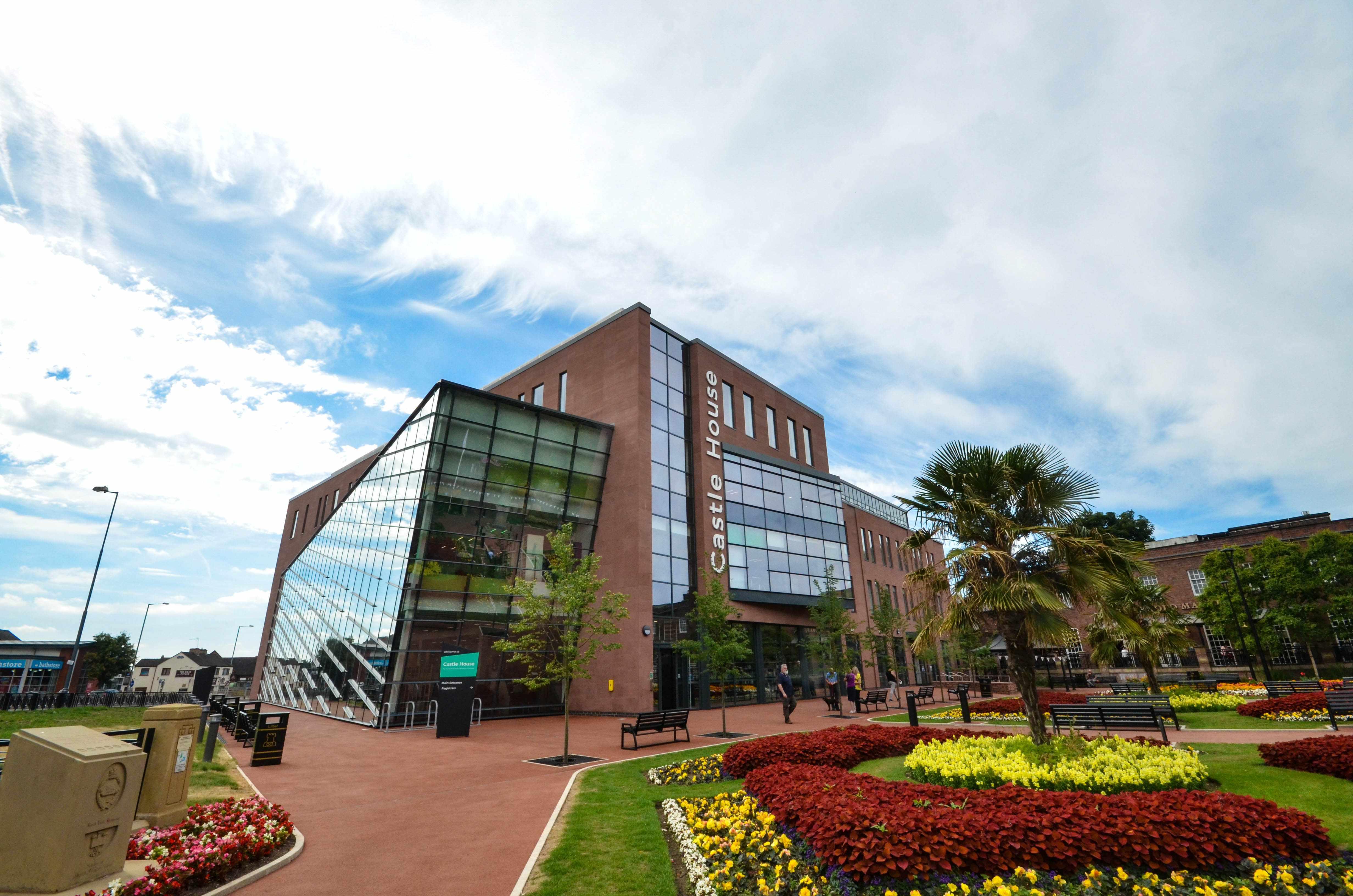
Work is well under way to identify savings, generate extra income and ensure resources are focused on residents’ priorities, as Newcastle-under-Lyme Borough Council plans for next year and beyond.
The Council is working to balance its budget for 2027/28 while maintaining a sustainable long-term financial position, against a backdrop of continued pressure on local authority finances and uncertainty around Local Government Reorganisation (LGR) and future Government funding.
Its updated Medium Term Financial Strategy (MTFS) forecasts a £777,000 funding gap next year and a £1.470 million gap over the five-year period to 2031/32. Financial pressures facing the Council include inflationary pressures, borrowing costs, higher costs for utilities, contractors, supplies and services, as well as increased staffing costs.
There is also uncertainty around future Government funding and the financial implications of LGR, with £400,000 currently held in a dedicated reserve and a further £200,000 provided for in the MTFS for 2027/28. It is not yet known whether these allocations will be sufficient, so the position will continue to be closely monitored while the Government reviews its proposals for Local Government Reorganisation in Staffordshire and Stoke-on-Trent.
Latest performance data shows that £1.599 million of savings identified for 2026/27 have been achieved or are on target to be achieved. The 2026/27 savings programme includes measures inherited from the previous administration, alongside decisions and efficiencies being taken forward during the current financial year.
A Budget Strategy Board, chaired by Council Leader Jonathan Gullis, is overseeing the development of the 2027/28 budget, with detailed challenge sessions taking place across each Cabinet portfolio.
The new administration is also reviewing existing spending assumptions and priorities as it develops its first full budget, with a focus on reducing unnecessary expenditure, increasing commercial income, making better use of Council assets and protecting the services residents value.
Initial draft savings proposals, including savings arising from the removal of unnecessary net zero-related projects and associated borrowing costs, will be presented to Cabinet and the Finance, Assets and Performance Scrutiny Committee in December as part of the budget consultation process.
Cllr. Martin Rogerson, Cabinet member for Legal, Governance and Organisational Performance, said:
The Council has a duty to provide value for money services and to look after taxpayers’ money responsibly. We are taking a long-term approach to our finances, not simply looking at how we balance next year’s budget but how we put the Council on the strongest possible footing for the years ahead.
Where inherited savings are working, we will continue to deliver them, but we are also challenging previous assumptions and developing our own proposals to reflect the priorities and ambitions of this administration. That means looking carefully at every area of spending, cutting unnecessary costs, exploring commercial opportunities and new sources of income, making better use of Council assets and prioritising resources towards the services residents value most.
We are also identifying savings arising from the decision to move away from costly net zero-related projects where they do not represent value for money, including associated borrowing costs.
Our ambition is to keep the burden on Council Taxpayers as low as possible and, where the Council’s financial position allows us to do so responsibly, go further than simply accepting year-on-year increases as inevitable. Residents will continue to be kept informed and will have the opportunity to have their say as our detailed budget proposals are developed over the coming months.”
The Council continues to closely monitor its performance alongside its financial position. During the first quarter of 2026/27, 77 per cent of the 31 performance indicators with set targets met their target, while 61 per cent of indicators with comparable data showed either improved or maintained performance compared with the previous year.
Final MTFS and budget proposals are expected to be considered by Cabinet in January 2027 before being presented to Full Council on 17 February.