

Keele neighbourhood plan representations
KE13 nineteen47 Keele University
Keele Neighbourhood Plan (Regulation 16) on behalf of Keele University, September 2026
Client: Keele University
Project: Keele University campus
Report title/version: Keele Neighbourhood Plan Regulation 16 Consultation
Date: September 2026
Written by: Matthew Barrow (Planner)
Approved by: Clare Plant (Director)
Introduction
This Representation has been prepared by nineteen47 on behalf of Keele University [“the University”] in response to the Keele Neighbourhood Plan Regulation 16 consultation.
The Representation relates to the University’s land at Keele University Campus, which is within the proposed Neighbourhood Plan area.
The University is a key strategic asset within the Borough and wider region, making a significant contribution to the local economy, education, research and community infrastructure. The importance of supporting its continued growth and evolution is well established within the emerging Newcastle-under-Lyme Local Plan, as previously set out within representations submitted by nineteen47.
The University welcomes the opportunity to engage with the Parish Council and Neighbourhood Plan Steering Group in shaping a locally responsive planning framework. In broad terms, the University is supportive of the work undertaken to date and the positive aspirations reflected within the Neighbourhood Plan.
Notwithstanding this general support, a number of detailed comments and recommendations are set out below to ensure that the Neighbourhood Plan is:
- consistent with National Policy (NPPF, 2026)
- aligned with the newly adopted Local Plan (2026) and
- sufficiently flexible to support the continued growth and investment of the University
The reminder of this representation is structured as follows:
- Section 2 - Keele University Campus Context
- Section 3 - Representations on the draft Neighbourhood Plan
- Section 4 - Conclusions
Section 2 | Keele University Campus Context
Keele University comprises a single campus site, close to Newcastle under Lyme. The campus offers a unique working, living and learning environment from which it delivers world class education and research, as well as supporting a range of commercial businesses within the Innovation Park.
However, the University is operating in an increasing competitive environment where learning buildings, student experience facilities and public ream play a key role in recruitment and retention. The University must continue to evolve to maintain credibility, improve the environmental performance of the estate, and ensure that the large areas of open space and numerous heritage assets of which the University are custodians, are maintained.
Keele University’s Strategic Vision ‘Our Future’ aims for the University to continue to grow as a research-led institution recognised for excellence in education, research and enterprise. The campus is a key asset for the University and a fundamental reason why staff, students and commercial business choose the University.
The University is developing a Capital Investment Plan (CIP) to provide a fit for purpose, environmentally and financially sustainable campus in the long term. It is important that the emerging Newcastle Under Lyme Local Plan and this draft Neighbourhood Plan supports the objectives of the CIP, to achieve the Borough’s wider economic, social and environmental objectives.
Current Planning Policy Context
The Newcastle-under-Lyme Local Plan 2020-2040 [the “Local Plan”] was adopted on 8 July 2026 and now forms part of the statutory development plan for the Borough. The Local Plan recognises the strategic importance of Keele University and provides the policy framework to support the continued growth and development of the University, its associated facilities and the wider innovation and employment offer.
The adopted Local Plan identifies a number of strategic allocations and policy designations within and around the University campus which are intended to support sustainable growth, investment, infrastructure delivery and economic development throughout the plan period to 2040.
The adopted Policies Map identifies both Keele Village and the developed areas of the Keele University Campus as areas inset from the surrounding Green Belt (see Figure 1). In addition, site allocations KL13 (Keele Science and Innovation Park Phase 3) and KL15 (Land South of the A525, Keele) establish the strategic framework for future development within the wider University area, supporting a mix of education, research, employment, residential and associated infrastructure uses. The Neighbourhood Plan should have regard to these adopted allocations and ensure that its policies and proposals are consistent with the strategic direction of the adopted Local Plan.
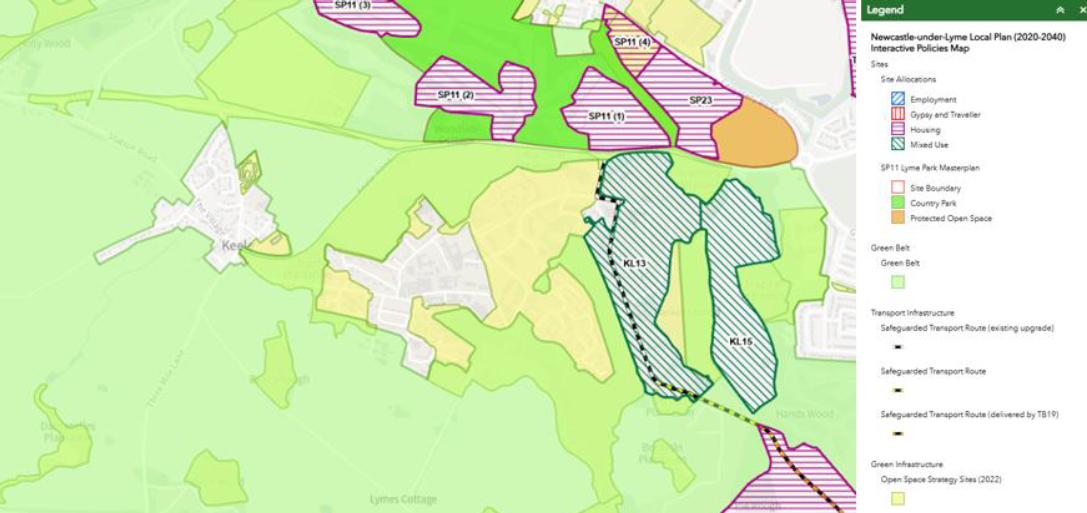
Figure 1: Newcastle-under-Lyme Local Plan Policies Map
As the Local Plan has now been adopted, the Neighbourhood Plan should be reviewed to ensure that all policies, supporting text, allocations, figures and proposals are fully aligned with the adopted development plan. This will ensure that the Neighbourhood Plan is in general conformity with the strategic policies of the development plan and satisfies the Basic Conditions set out in paragraph 8(2) of Schedule 4B of the Town and Country Planning Act 1990.
Since preparation of earlier versions of the Neighbourhood Plan, the National Planning Policy Framework [“NPPF”] was revised and republished in August 2026 and now represents the latest statement of national planning policy. The revised NPPF provides the current framework for both plan-making and decision-taking and is a key consideration in assessing whether a neighbourhood plan has regard to national policy and satisfies the Basic Conditions.
Accordingly, the Neighbourhood Plan should be reviewed to ensure that all policies, supporting text, evidence base documents and development management criteria have appropriate regard to the NPPF. Particular attention should be given to those policies relating to sustainable development, economic growth, climate change, Green Belt, design quality, biodiversity, infrastructure provision and sustainable transport. This will ensure that the Neighbourhood Plan remains effective, up-to-date and consistent with the national planning policy framework throughout the plan period.
The University therefore recommends that the Parish Council review the Neighbourhood Plan in its entirety against the NPPF and the newly adopted Local Plan to ensure that its policies remain consistent with current national policy and continue to provide a positive framework for sustainable development, investment, environmental enhancement and economic growth throughout the plan period.
Section 3 | Representations on the Draft Neighbourhood Plan
In order for a Neighbourhood Plan to be made, it must meet a set of basic conditions. The basic conditions are set out in paragraph 8(2) of Schedule 4B to the Town and Country Planning Act 1990 as applied to neighbourhood plans by section 38A of the Planning and Compulsory Purchase Act 2004. The basic conditions are:
a) having regard to national policies and advice contained in guidance issued by the Secretary of State, it is appropriate to make the order (or neighbourhood plan).
b) having special regard to the desirability of preserving any listed building or its setting or any features of special architectural or historic interest that it possesses, it is appropriate to make the order. This applies only to Orders.
c) having special regard to the desirability of preserving or enhancing the character or appearance of any conservation area, it is appropriate to make the order. This applies only to Orders.
d) the making of the order (or neighbourhood plan) contributes to the achievement of sustainable development.
e) the making of the order (or neighbourhood plan) is in general conformity with the strategic policies contained in the development plan for the area of the authority (or any part of that area).
f) the making of the order (or neighbourhood plan) does not breach and is otherwise compatible with EU obligations.
g) prescribed conditions are met in relation to the Order (or plan) and prescribed matters have been complied with in connection with the proposal for the order (or neighbourhood plan).
The following representations are made in the context of the Basic Conditions and with particular regard to the requirement for the Neighbourhood Plan to have regard to national policy, contribute towards the achievement of sustainable development and be in general conformity with the strategic policies of the adopted development plan.
Evidence and Planning Rationale
The final paragraph on page 13 of the draft Neighbourhood Plan indicates that:
Keele currently has the following services: a supermarket, GP, a pharmacy, coffee shops, restaurants/ cafes, two places of worship, a pub, a village hall, St Johns CE primary school, restaurants, village hall, golf driving range, and a good public transport service.
A large proportion of the above facilities are located within the university campus rather than in Keele village.
References to the area defined as ‘Keele’ vary throughout the Neighbourhood Plan document. In some parts of the document, Keele is collectively defined as ‘the village and university campus’, or the Neighbourhood Plan area. Elsewhere in the document, separate references are provided to the village and the estate.
It is recommended that given the distinctions made within the adopted Local Plan between both areas, that the above paragraph is updated to reflect those facilities within Keele Village, and separately, those facilities provided within the campus. This will assist with references elsewhere in the document to community facilities and ensure factual accuracy.
The Strategic Objectives
The University is broadly supportive of the vision, objectives and overall direction of the Neighbourhood Plan, particularly where it seeks to protect the distinctive character of Keele, enhance green infrastructure and environmental quality, support sustainable development and recognise the importance of Keele University as a strategic asset within the Borough.
The University remains committed to working collaboratively with the Parish Council and other stakeholders to deliver these shared objectives whilst supporting the continued growth and evolution of the University Estate. As a major employer, education provider, research institution and economic driver, the University considers that the Neighbourhood Plan should positively support investment, innovation and sustainable development that contributes to the social, economic and environmental objectives of the Parish and wider Borough.
The University welcomes the amendments made between the Regulation 14 and Regulation 16 versions of the Neighbourhood Plan, particularly the inclusion of references to strategic allocations KL13 (Keele Science and Innovation Park Phase 3) and KL15 (Land South of the A525, Keele), which are now contained within the adopted Newcastle-under-Lyme Local Plan 2020-2040.
Since publication of the Regulation 16 Submission Version, the Local Plan was formally adopted on 8 July 2026 and now forms part of the statutory development plan for the Borough. The Neighbourhood Plan should therefore be reviewed to ensure that all policies, supporting text, maps and evidence consistently reflect the adopted development plan and its strategic objectives.
The University notes that a significant proportion of the evidence base referenced throughout the Neighbourhood Plan continues to rely upon studies undertaken in 2017 and earlier. Whilst some evidence remains relevant, it is important that the Parish Council demonstrates that this evidence remains robust and proportionate having regard to changes in planning policy, biodiversity legislation, climate change policy, infrastructure requirements and development pressures.
The Neighbourhood Plan should also be reviewed to ensure that all references are consistent with the adopted Local Plan and the most recent NPPF. This will assist in ensuring compliance with the Basic Conditions and maintain the effectiveness of the Plan throughout its lifespan.
Policy KNP4 - Community Facilities
Within the context of comments raised at Paragraphs 3.3-3.6 of this representation, draft policy KNP-4 seeks to support new and existing community facilities, and protect against the loss of community uses.
The University supports the overarching objective of maintaining and enhancing facilities that contribute to the vitality and wellbeing of the local community. The University has a long-standing and positive relationship with the surrounding area and welcomes continued collaborative working where this can be achieved in a manner that is consistent with its operational, educational and estate management responsibilities.
However, the supporting text accompanying Policy KNP2 identifies a number of ‘key local facilities’, which it acknowledges are located within the University campus. Whilst some of these facilities may from time to time be accessible to members of the wider community, they are principally provided to serve the needs of university staff, students and residents of the campus. Their primary function is therefore educational and operational rather than community based.
It is important to recognise that there is no formal Community Use Agreement or equivalent mechanism that secures public access to these facilities. Access is instead provided at the discretion of the University and may be reviewed periodically in response to operational requirements, student and staff demand, estate management considerations, security requirements and wider strategic objectives.
The University must retain sufficient flexibility to manage its estate effectively and respond to changing circumstances over the plan period. This is particularly important in the context of the Terrorism (Protection of Premises) Act 2025, which places additional responsibilities on organisations in relation to the security and management of premises, as well as the need to maintain the long-term financial sustainability and viability of higher education institutions. The University may therefore need to adapt, reconfigure, relocate or withdraw certain facilities in the future where this is necessary to meet its statutory obligations or the evolving needs of staff and students.
As currently drafted, there is a risk that Policy KNP2 and its supporting text could be interpreted as affording the facilities identified within the University campus the same status as dedicated community facilities that are expressly provided for public use. This does not accurately reflect the nature of their provision or operation.
The supporting text and/or policy wording should be amended to recognise the contribution that additional community facilities can make to the area, whilst acknowledging that there are other material considerations relevant to changes to these facilities, which should not be unduly restricted by this policy.
Such amendments will ensure that the policy accurately reflects the role and function of facilities within the University estate, whilst providing the flexibility necessary for the University to continue meeting its responsibilities and adapting to changing needs over the lifetime of the Neighbourhood Plan.
Policy KNP8 - Environment and Biodiversity
The University supports the overarching aims of Policy KNP8 in enhancing biodiversity and environmental quality.
Whilst the University supports the overall aims of Policy KNP8, it is considered that elements of the policy remain overly prescriptive and are not fully aligned with national policy requirements.
In particular, Part 4 of Policy KNP8 seeks the delivery of 20% Biodiversity Net Gain where development of greenfield land is unavoidable. This exceeds current national mandatory Biodiversity Net Gain requirements and there is no evidence within the Neighbourhood Plan to demonstrate why a higher requirement is justified, deliverable or viable.
Furthermore, elements of the policy risk duplicating matters already addressed through environmental legislation, planning conditions and other regulatory processes.
It is therefore recommended that Policy KNP8 should be amended to reflect the statutory requirement for 10% biodiversity net gain, and to align with the requirements of the NPPF (Policy N2(3)), and the adopted Local Plan (Policy SE7(1)).
The remaining wording of the policy should retain sufficient flexibility to support sustainable development and future investment within the University Estate, whilst achieving innovative BNG solutions.
Strategic Transport Infrastructure
The adopted Local Plan identifies strategic infrastructure associated with allocations KL13 and KL15, which will be necessary to support planned growth in and around the University campus.
The University recommends that the Neighbourhood Plan should not prejudice or undermine the delivery of strategic transport and connectivity improvements required to facilitate these allocations.
Supporting text should recognise the importance of future infrastructure investment in enhancing connectivity, supporting sustainable transport choices and facilitating the continued growth of the University and wider area.
Policy KNP9 - Landscape
The University supports the objective of protecting landscape character and maintaining the distinctive setting of Keele Village.
However, the areas identified under Part 2 of Policy KNP9 appear to be afforded a degree of additional protection which exceed existing Green Belt, landscape and heritage policies within the adopted Local Plan. The evidence supporting this approach should be clearly articulated to ensure that the policy is robustly justified. Alternatively, these aspects of the policy should be omitted.
The policy should also make clear that development proposals should be supported, where it is be demonstrated that landscape impacts are acceptable and wider sustainability benefits exist.
Without such acknowledgement, the policy risks being overly restrictive and may conflict with national policy objectives supporting sustainable development. The policy should be reviewed to ensure it is evidence-based, proportionate and consistent with the adopted development plan.
Policy KNP10 - Green Space Designations
The University notes that following representations made previously on the draft neighbourhood Plan, the Policy KNP10 has been updated within the Regulation 16 document so that the supporting text relating to Local Green Space designations more accurately reflects national policy terminology.
Whilst this amendment is welcomed, the Plan should ensure that Local Green Space designations remain in accordance with national policy and are not interpreted as creating additional restrictions beyond those envisaged by the NPPF.
The clarification provided within the supporting text to distinguish clearly between Local Green Space and Green Belt policy designations is therefore welcomed, in order to avoid confusion in interpretation and decision-making.
KNP12 - Keele University Estate
The University strongly supports the inclusion of a specific policy relating to the Keele University Estate and welcomes recognition of the University's strategic role within the Parish and wider Borough.
We welcome the support that the policy provides for the implementation of the University's Estates Strategy, Campus Investment Programme and future masterplanning initiatives. Given the iterative and evolving nature of these documents, reference to the ‘University Masterplan’ should be updated to refer more broadly to ‘the University's most recent approved masterplan or equivalent strategic estate document’.
The University notes that the supporting text to KNP12 states that the policy "does not encourage stylistic imitation". Whilst the intention of this wording is understood, it is considered unnecessary and risks creating ambiguity in policy interpretation. The determination of the acceptability of design in proposed development is a matter for the Local Planning Authority in the determination of planning applications, and it is considered that Local Plan design policies are sufficient to ensure that development is appropriate to its environment. The wording within the supporting text to KNP12 stating that the policy "does not encourage stylistic imitation" should therefore be deleted.
This amendment will provide a clear, positive and flexible framework to supports future growth, investment, innovation, education, research, employment and associated infrastructure, whilst recognising the importance of the University's historic and environmental assets.
Figure 8 - Site Allocations
The University recommends that Figure 8 and the associated policy supporting text more clearly acknowledge the relationship between the University Estate and the strategic allocations contained within the newly adopted Local Plan.
This will assist decision-makers in understanding how future development proposals should be considered alongside the strategic planning framework established through the adopted Local Plan.
Sections 4 - Green Guidance Note
The University welcomes the inclusion of Section 4.1, which clarifies the purpose and intended status of the Green Guidance Note.
Notwithstanding this improvement, the relationship between the guidance and the planning policies of the Neighbourhood Plan should be strengthened through additional cross-referencing where appropriate.
This will assist applicants, decision-makers and other stakeholders in understanding the weight that should be afforded to the guidance.
The content should also be reviewed to ensure that it remains consistent with the adopted Local Plan and the NPPF.
The University further recommends that the reference to "small wind turbines" is clearly defined, for the purposes of making that element of the policy effective. In the absence of a definition there is potential for ambiguity and inconsistent interpretation in decision-making.
Section 5.1 - Infrastructure Projects
The University notes that Section 5.1 is now presented as guidance relating to the use of planning infrastructure monies.
Whilst the purpose of the section is clearer than in previous drafts, the identified projects should ensure consistency with relevant legislative and policy requirements governing infrastructure funding and planning obligations.
The section should also recognise the importance of continued investment within the Keele University Estate and the role of the University as a major employer, education provider, research institution and community asset.
It is recommended that the infrastructure priorities are reviewed periodically to ensure they remain justified, proportionate and aligned with the strategic priorities of the adopted development plan and the evolving needs of the Parish.
Section 4 | Conclusions
This Representation has been prepared by nineteen47 on behalf of Keele University in response to the Keele Neighbourhood Plan Regulation 16 Consultation.
Keele University is a key strategic asset within Newcastle-under-Lyme and the wider region. The University remains committed to working proactively with the Parish Council and other stakeholders to support the preparation of a robust and effective Neighbourhood Plan.
The comments set out in this representation are intended to:
- ensure alignment with the adopted Newcastle-under-Lyme Local Plan 2020-2040
- ensure regard is had to the National Planning Policy Framework (August 2026)
- improve the clarity and effectiveness of policies
- ensure compliance with the Basic Conditions and
- support the continued growth, investment and long-term sustainability of Keele University
Subject to the amendments identified within this representation, it is considered that the Neighbourhood Plan can provide a sound and effective framework for guiding development within Keele Parish.
The University remains committed to ongoing engagement with the Parish Council and other stakeholders as the Plan progresses towards examination and adoption.